As what I introduced in my previous post, there are three phrases of analysis: open coding, axial coding, and selective coding, especially in the systematic design in grounded theory (Creswell & Guetterman, 2019). For the definition of these three coding approaches, please check out my previous post.
1. Open Coding—1st phrase of analysis

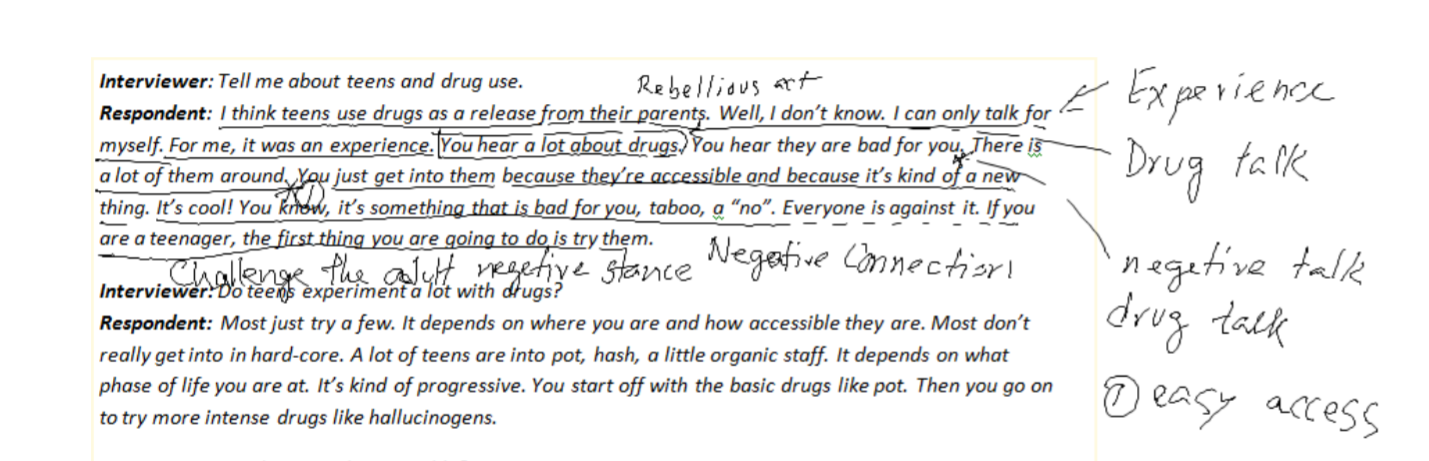
The image above is from Crook’s thesis (2013).
This is the first phrase of analysis – researchers reads the transcripts and determines different kinds of categories/themes/concepts (the three terms are the same thing but called differently by different researchers; for more details, see the footnote on p. 438, Creswell & Guetterman, 2019) that are found in the data. As explained in Chapter 8 in the textbook – Analyzing and Interpreting Qualitative Data, coding is when the researcher circles a chunk of text and write down the name of the category you have come up with next to that chunk of text (Creswell & Guetterman, 2019, p. 243-245).
Based on Miles, Huberman, and Saldana (2014), in this phrase, researchers should be open to what the participants are saying and open to the different types of categories that the researcher sees in the data.
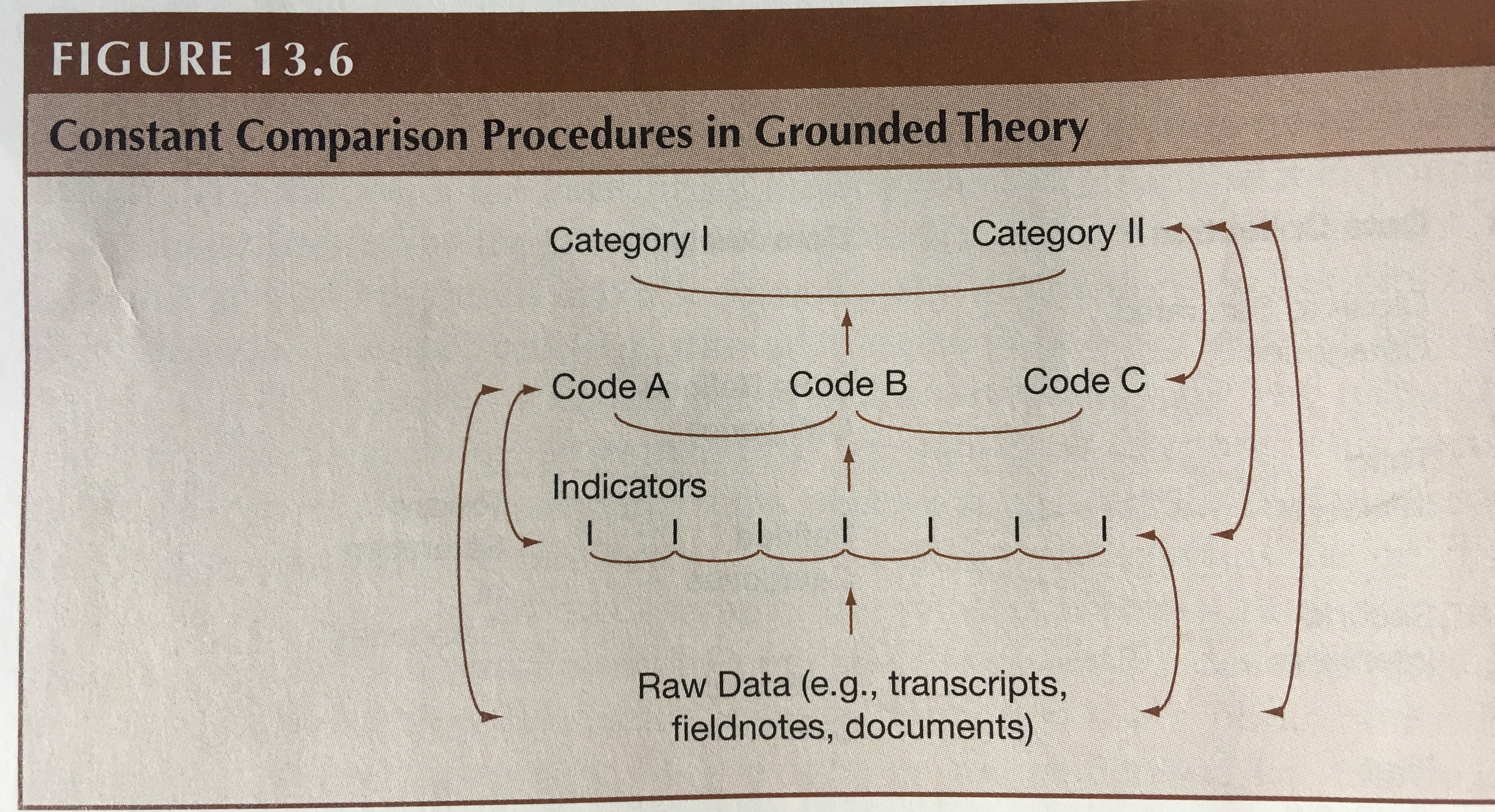
During open doing, researchers are also conducting constant comparative analysis (we will look at this later in this post), which is when researchers constantly compare the data to the categories to see if it is consistent in how the researcher codes the data in each category. If a new chunk of data doesn’t fit into a particular category, maybe the researcher needs to create a new category.
- Constant Comparative Data Analysis
“Constant comparison is an inductive data analysis procedure of generating and connecting categories” (Creswell & Guetterman, 2019, p. 445). The researcher compares data to other incidents, incidents categories, and categories to other categories to make sense of the data.
As information is coded and then put into categories, new information is compared to existing codes and categories. By comparing information constantly it allows for new codes and categories to emerge if current ones do not fit new data. In addition, codes and or categories that were separate may be combined as the data indicates.
During open doing researchers also make memos (please see the section of Memos later in this post) , which is when the researchers write notes to themselves throughout open coding regarding how the categories are beginning to explain the process and how these categories can be formed into a theoretical model.
- Memos
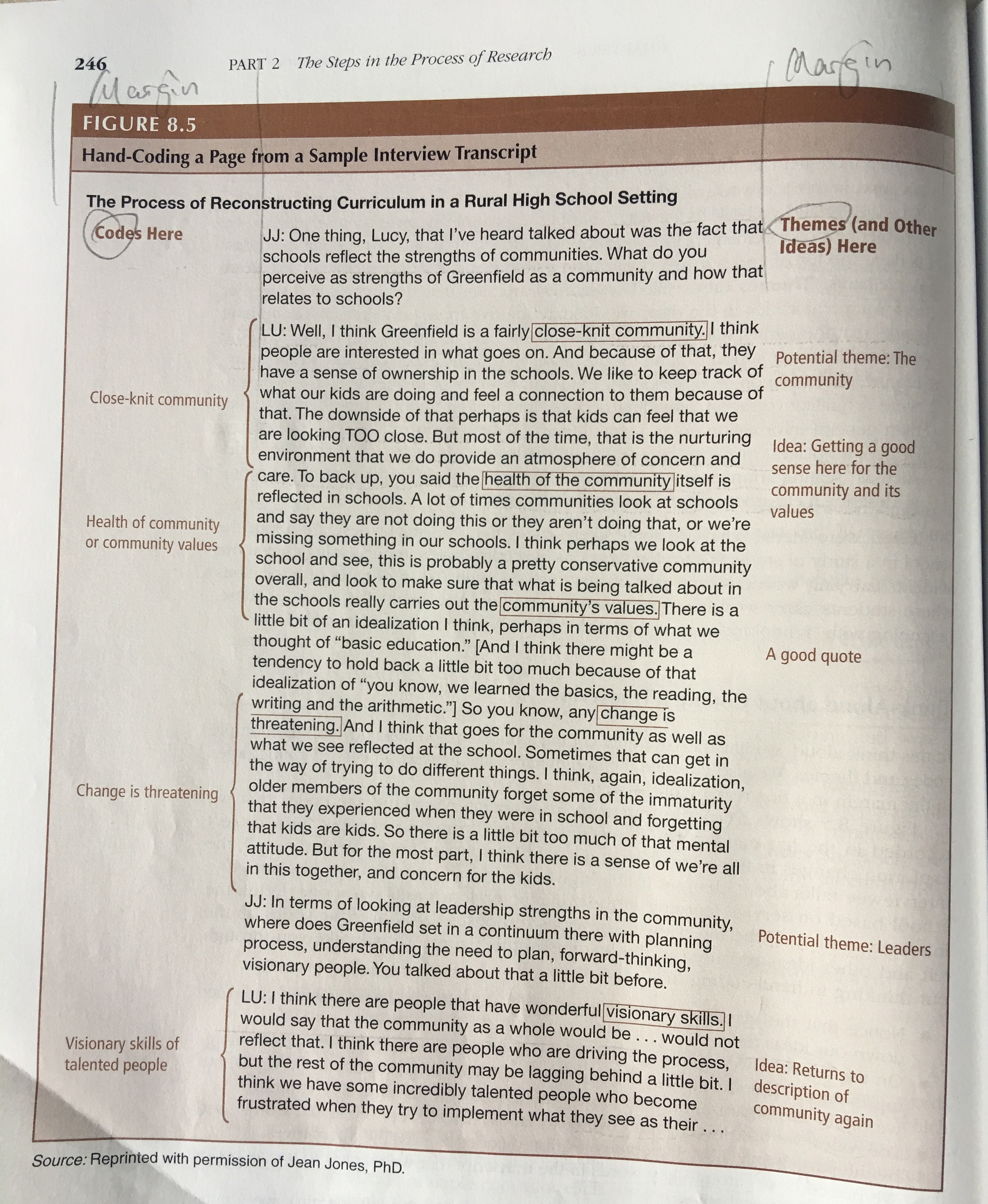
“Memos are the notes that the researcher writes throughout the research process to elaborate on ideas about the data and the coded categories” (Creswell & Guetterman, 2019, p. 450). Here is an example of taking memos (Figure 8.5) – it is a good idea to write the notes in the margins, which are located on the two sides of the paper (Creswell & Guetterman, 2019, p. 246).
Open coding is finished when the researcher feels that he has compared the data and categories to each other over and over that constant comparative analysis, and he feels like there are no new categories coming from the data; the researcher has read the transcript so many times that he is sure that he has found each major theme and there is no more things that can be made, so open coding is done and the researcher would say that the data at this point has been coded (Creswell & Guetterman, 2019, p. 445 & 453).
Key Points in Open Coding
Let’s conclude the steps in Open Coding:
- Read transcripts and determine different categories that are in the data
- Coding: circle a chunk of text and label it with a category name that it fits in
- Constant comparative analysis: Researchers constantly compare data to the categories to determine consistency in coding the data.
- Memos: notes that the researcher writes throughout the research process to elaborate on ideas about the data and the coded categories.
- Open coding is completed when there are no more new categories coming from the data.
2. Axial Coding – 2nd phrase of analysis

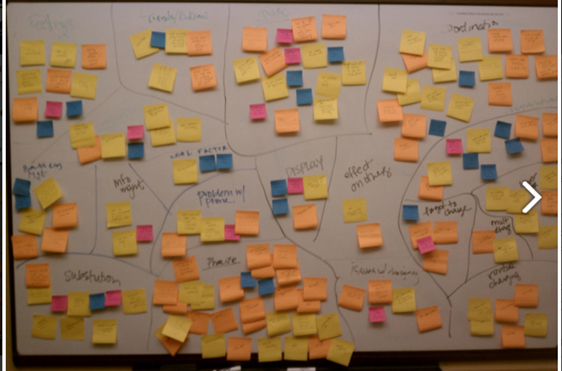
Axial coding is the next phrase. As shown in the picture above, Figure 13.3 (Creswell & Guetterman, 2019, p. 439), axial is when the researcher uses the codes to think about how each of the categories relate to each other. This is the part of the analysis that actually develops and forms the theory. The researcher looks for categories that may be the core phenomenon, causal conditions, strategies, and consequences and figure out how these categories connect to each other. Researchers show these relationships and connections through a coding paradigm or a logic diagram, which is a visual model that shows the categories with lines and arrows to show an explanation of how the process works.

Key Points in Axial Coding
- The researcher uses the codes & memos to show how categories relate to each other.
- Axial coding forms the theory: the researcher looks for categories that may be the core phenomenon, causal conditions, strategies, and consequences and connects these categories to each other.
- Coding paradigm/logic diagram: visual model to explain how the process works.
3. Selective Coding – the last phrase of analysis
Selective coding is when the researchers write a storyline about how the theory explains the core process – how all the categories are related. It is an overall explanation of the theory.
Key Points in Selective Coding
- Researchers write a story about how the theory explains the core process.
- An overall explanation of the theory
References
Creswell, J. W. & Guetterman, T. C. (2019). Educational research: Planning, conducting, and evaluating quantitative and qualitative research (6th ed.). Boston: Pearson.
Crook, T. A. (2013). A case study exploring the value and relevance of using the teaching ESL students in mainstream classrooms (TESMC) course for professional development related to teaching English to speakers of other languages with mainstream teachers of English language learners in international schools.
Miles, M. B., Huberman, A. M., & Saldana, J. (2014). Qualitative data analysis: A methods sourcebook (3rd ed.). SAGE Publications.
 Grounded Theory Design